
“I need more followers.” “I need more traffic.” Maybe. But often the business already gets enough visitors — they just leak out somewhere between the first click and the payment.
What is a funnel?
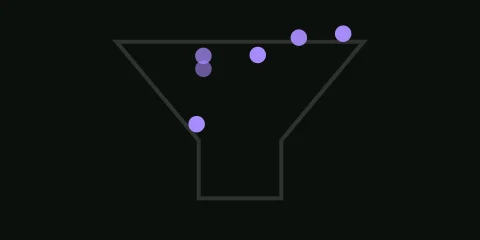
Picture everyone who ever hears about you at the top of a funnel. At each step — visiting your site, leaving their email, booking a call, paying — some people drop out. What comes out the bottom are customers.
The funnel simulator
Drag the rates. The highlighted stage is where +1 percentage point brings the most extra revenue.
Monthly revenue
$2,250
⭐ +1 point here = +$750/month. Clear offer above the fold, one call to action, a lead magnet.
Example rates; real benchmarks vary a lot by industry and price.
Revenue is a multiplication, not a sum. Fix the weakest factor first.
Quick check
Lead → customer conversion goes from 5% to 10%. What happens to revenue (same traffic)?
Fixing each stage
Visitor → lead
- Say in one sentence who you help and with what, above the fold.
- One clear call to action. A free, useful “lead magnet” (checklist, audit, quote).
- A fast page — slow pages lose visitors before they read anything (Core Web Vitals).
Lead → sales conversation
- Reply within minutes, not days. Speed is one of the biggest conversion factors.
- Follow-up emails with case studies and answers to common objections.
Conversation / cart → customer
- Reviews, guarantees, clear prices, fewer checkout fields, many payment options.
- Remove surprises: shipping costs and delays shown early.
After the sale
Repeat customers and referrals are the cheapest customers you'll ever get. Ask for reviews and referrals at the moment of delight.
How to measure it
- Track each step as an event in your analytics (form submitted, call booked, checkout started, paid).
- Keep leads in a simple CRM — even a spreadsheet — with a stage column.
- Review weekly: which stage dropped? Change one thing at a time.